
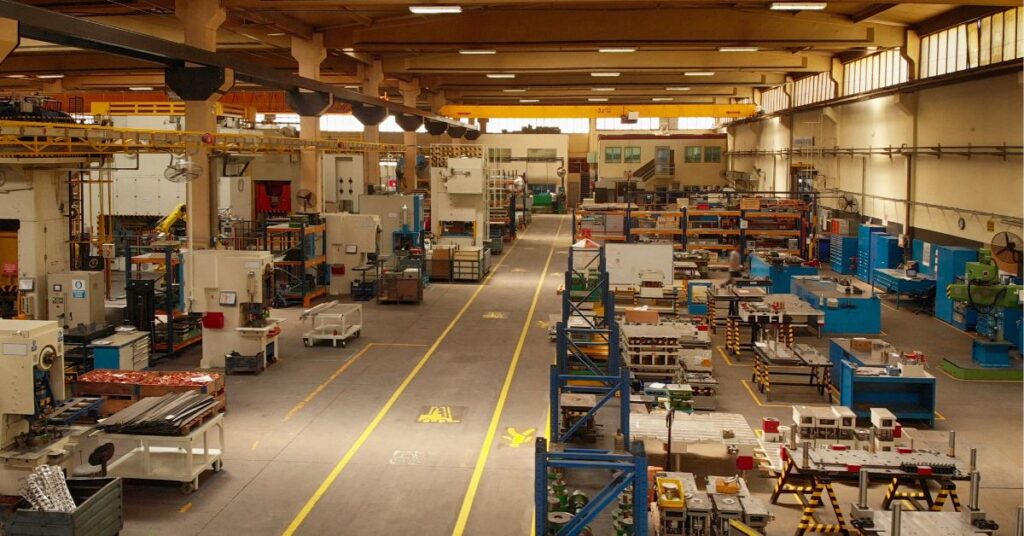

Metal fabrication is one of the quiet engines behind industrial growth. It turns raw materials into the physical components that other industries depend on: machinery parts, steel structures, tanks, frames, racks, production lines, molds, fixtures, enclosures, automotive components, energy systems, construction elements, and industrial equipment.
In Egypt, this sector sits at the heart of several national priorities: local manufacturing, import substitution, export readiness, industrial modernization, and job creation. But while demand for fabricated metal products is growing, many factories and workshops still face the same repeated barriers: design errors, material waste, outdated equipment, low productivity, weak technical documentation, inconsistent quality, and limited access to specialized R&D support.
The opportunity is clear: Egypt does not only need more metal fabrication capacity. It needs smarter fabrication - supported by engineering, testing, digital tools, skilled labor, and applied research that solves real factory problems.
The economic case: why metal fabrication matters now
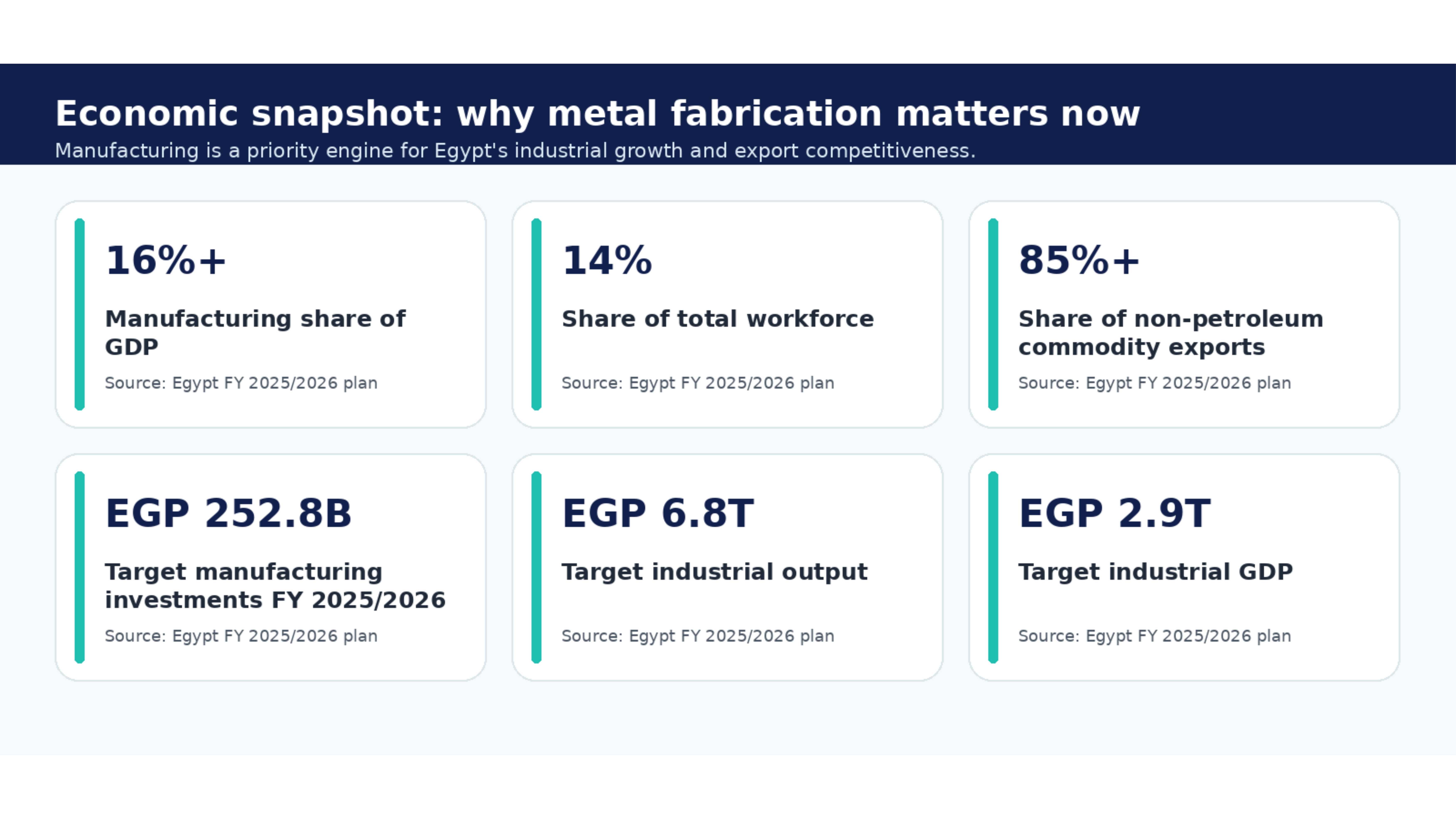
Manufacturing is one of Egypt's most important economic sectors. According to Egypt's Ministry of Planning, Economic Development and International Cooperation, manufacturing contributes no less than 16% of GDP and around 14% of the total workforce. It also contributes more than 85% of Egypt's non-petroleum commodity exports.
The FY 2025/2026 plan targets around EGP 252.8 billion in manufacturing-sector investments, representing a 154.1% annual increase compared to actual investments in FY 2023/2024. The same plan targets industrial output of around EGP 6.8 trillion and industrial GDP of around EGP 2.9 trillion.
This matters directly to metal fabrication because most industrial growth requires fabricated inputs. Every expansion in food processing, construction, renewable energy, automotive components, logistics, packaging, machinery, chemicals, or infrastructure creates demand for fabricated metal products, equipment, spare parts, production line components, and customized engineering solutions.
The Ministry's industrial development priorities also point to areas where metal fabrication can play a major role: iron and steel products, pipes and boilers, automotive components and spare parts, solar power station components, desalination and wastewater treatment equipment, and energy-efficient industrial products. In this context, metal fabrication is not a supporting activity. It is a strategic industrial capability.
The current challenge: strong practical know-how, but limited innovation systems
Egypt has a strong base of technicians, engineers, workshops, and factories with practical experience in fabrication, welding, machining, cutting, bending, assembly, and maintenance. Many of these businesses are flexible, resourceful, and able to deliver customized work quickly.
However, practical experience alone is no longer enough. Local fabricators are competing with imported products, international suppliers, stricter quality expectations, shorter delivery timelines, and clients who increasingly ask for documentation, repeatability, certifications, and cost transparency.
Common operational pain points in metal fabrication
High material waste due to weak design planning or nesting optimization.
Costly rework caused by unclear specifications or poor technical drawings.
Welding quality variation due to limited procedure standardization.
Manual production steps that reduce productivity and increase human error.
Equipment downtime and weak preventive maintenance systems.
Limited use of CAD/CAM, simulation, ERP, production planning, and digital job cards.
Difficulty calculating real production costs accurately.
Skills status: the missing layer between technicians and industrial innovation
The metal fabrication sector depends on a mix of manual skill, technical knowledge, and engineering discipline. A strong welder, machinist, fabricator, or maintenance technician can make a major difference in product quality. But as the sector moves toward higher-value products, export markets, and more complex engineering requirements, the skills needed are becoming more advanced.
The most important skills gaps are not only in labor availability. They are in the connection between shop-floor execution and engineering decision-making. Factories increasingly need technical drawing interpretation, CNC operation, welding standards, material knowledge, metrology, QA/QC, production planning, costing, traceability, and energy-efficiency awareness.
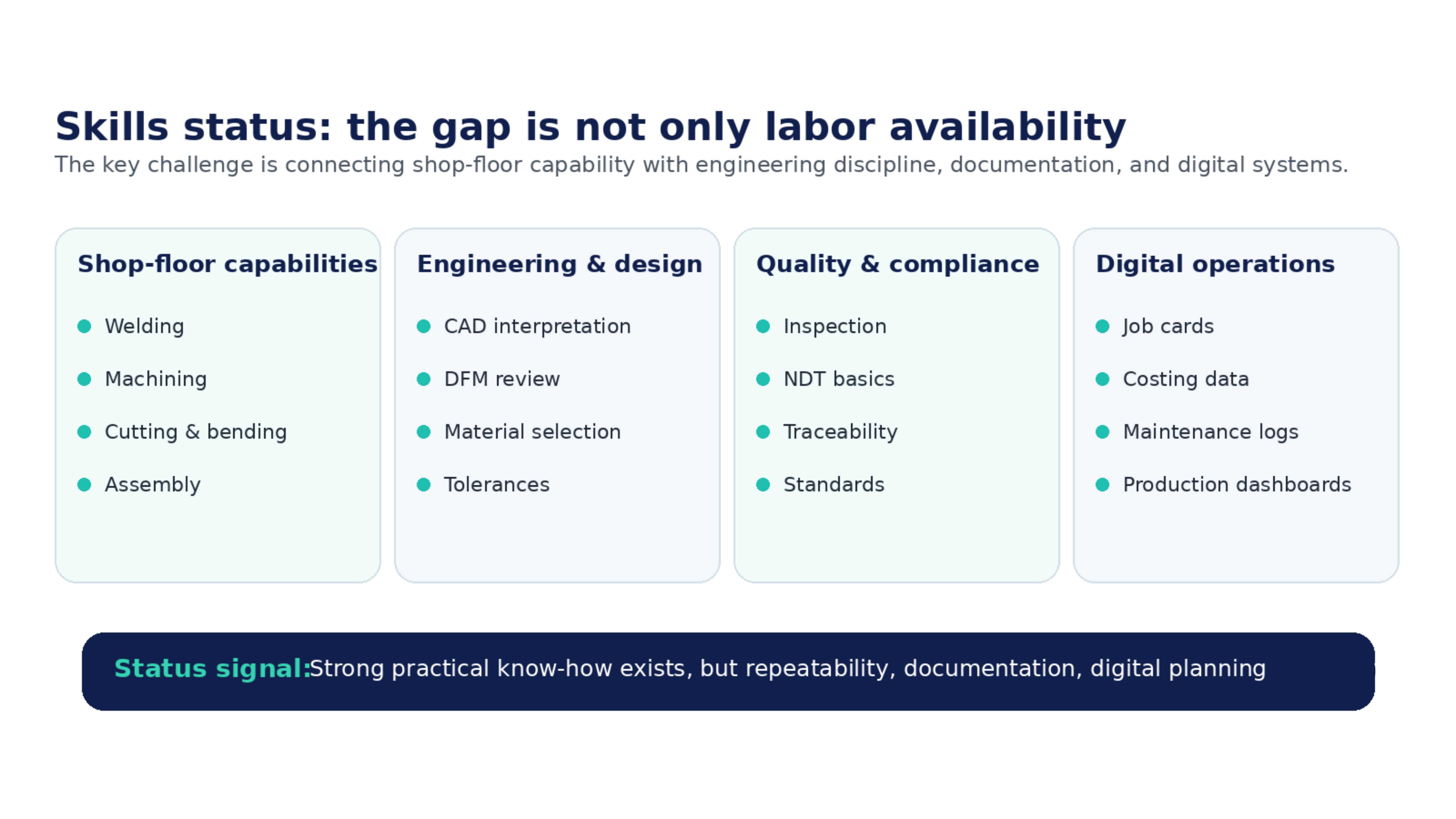
This means the sector needs more than training courses. It needs applied learning around real production problems, where technicians, engineers, researchers, and factory managers work together to improve measurable outcomes.

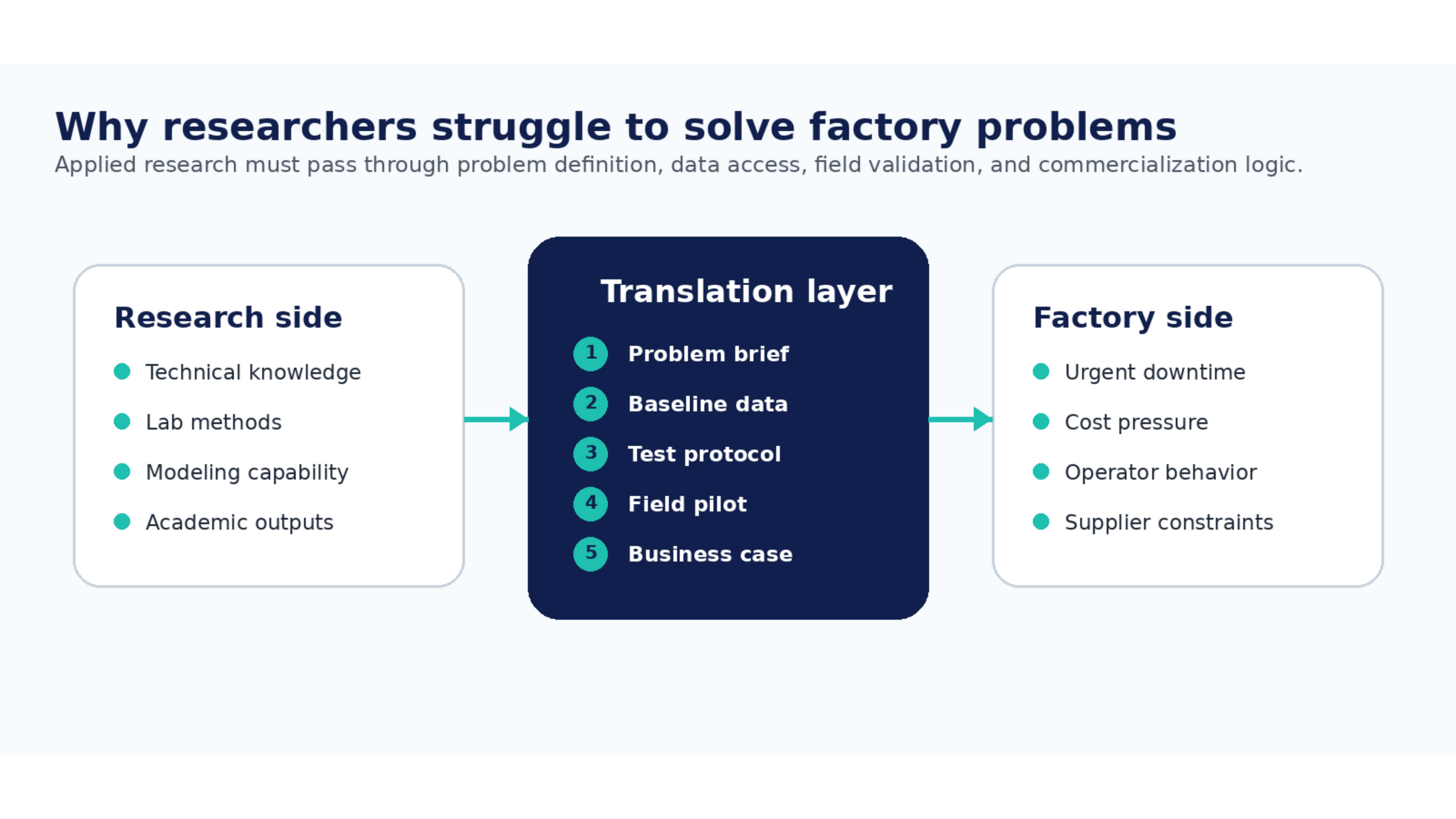
Why researchers struggle to solve industry problems
Egyptian researchers have strong technical capabilities, but many research outputs do not reach factories. In metal fabrication, the gap is especially visible because industrial problems are practical, cost-sensitive, and time-bound.
Factory problems are not always clearly defined. A request for “better productivity” may actually be a design, machine, material, workflow, training, or maintenance problem.
Industry needs applied solutions, not only advanced research. A better fixture, cutting layout, maintenance protocol, sensor setup, or testing method may create more value than an expensive technology project.
Access to real factory data is limited. Researchers need defect rates, waste, downtime logs, material behavior, cost data, and operating conditions.
Validation must happen under real operating conditions. Dust, heat, operator behavior, old machines, power instability, and production pressure can change the result.
Commercialization is often missing. A solution must answer: How much will it cost? Who will operate it? What training is needed? What is the payback? Can it be replicated?
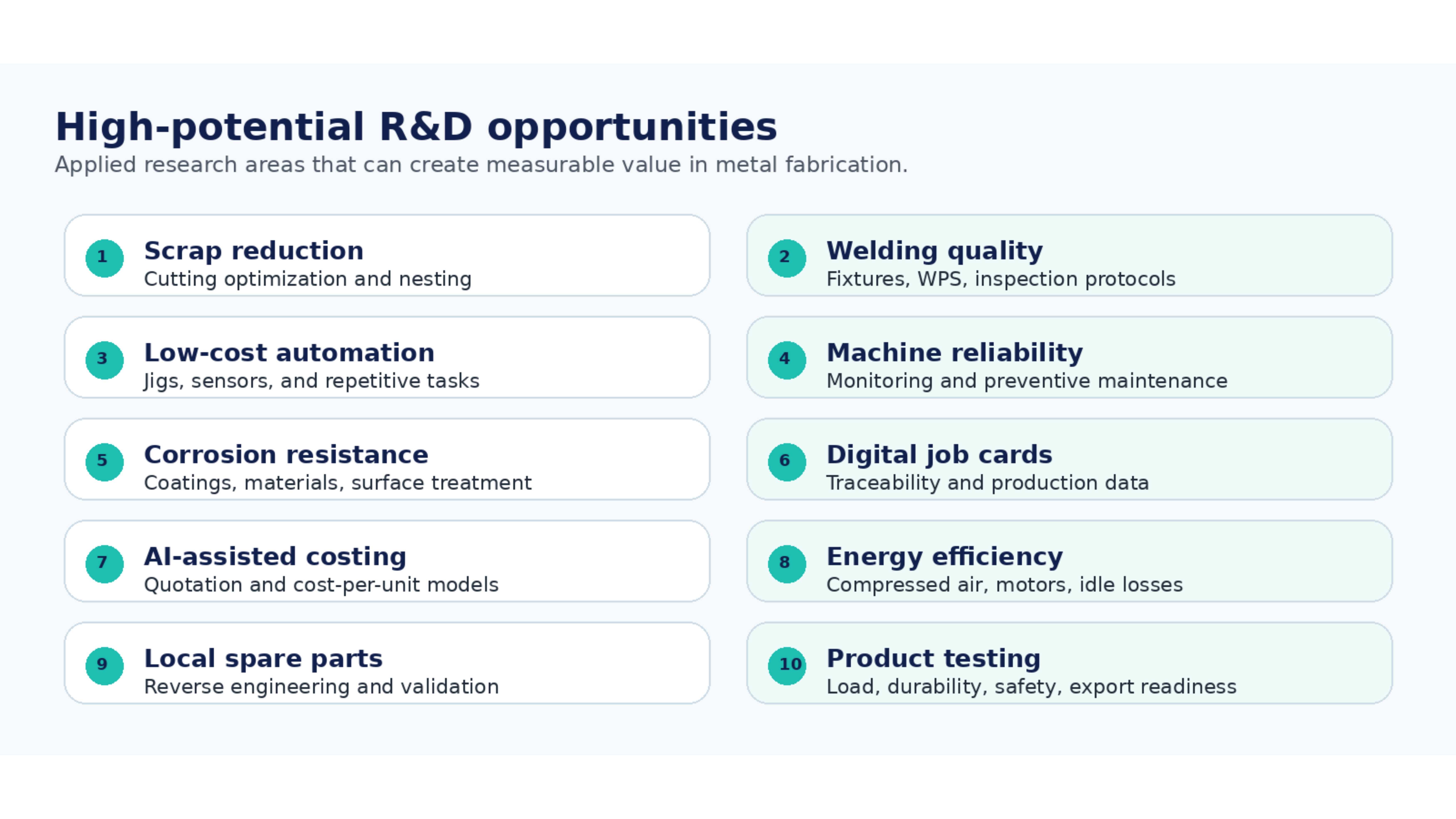
High-potential R&D opportunities in metal fabrication
The sector offers strong opportunities for applied research, product development, and industrial innovation. The strongest projects are those that start from measurable factory pain points and end with field-tested improvements.
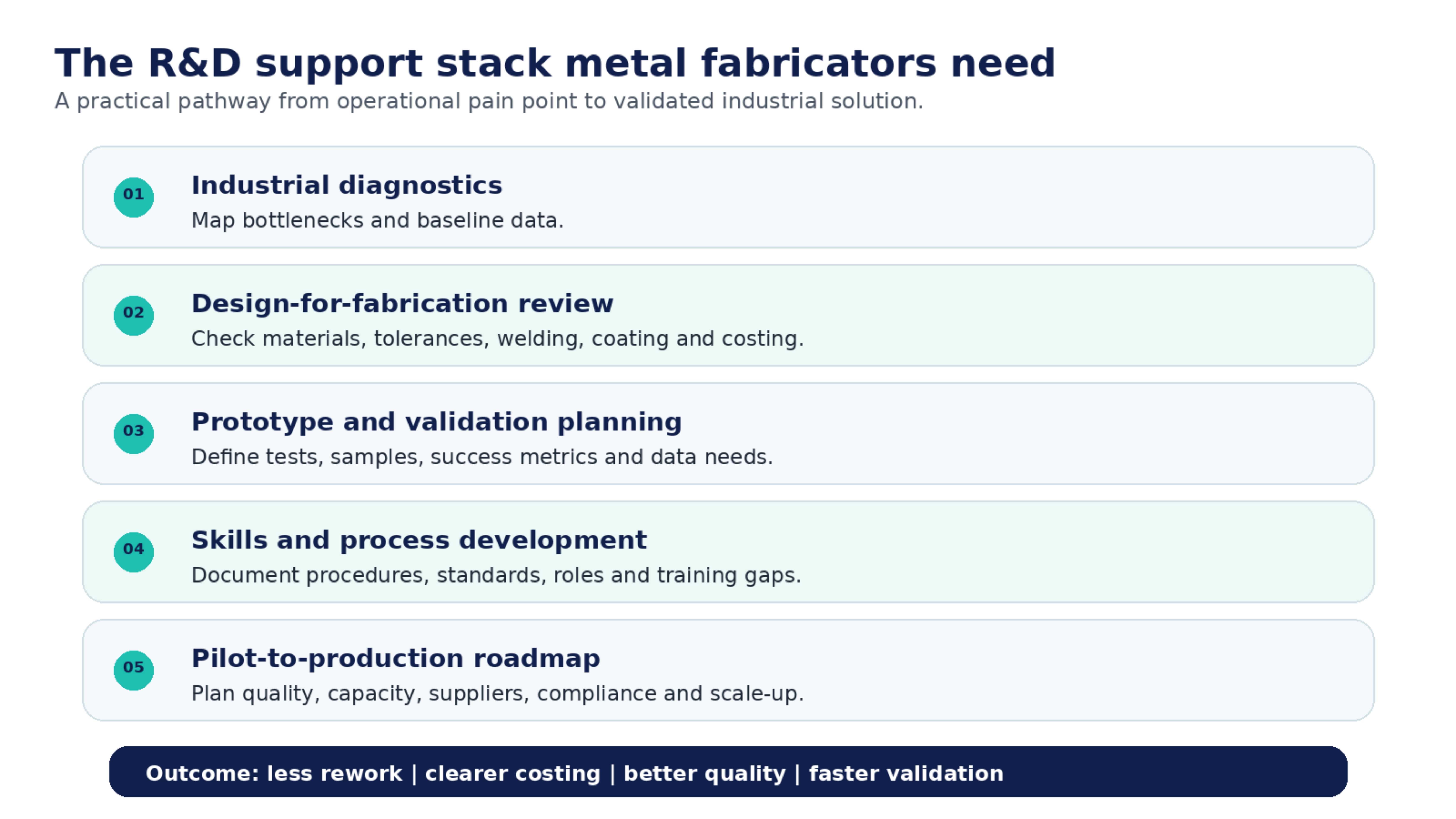
What solutions does the sector need?
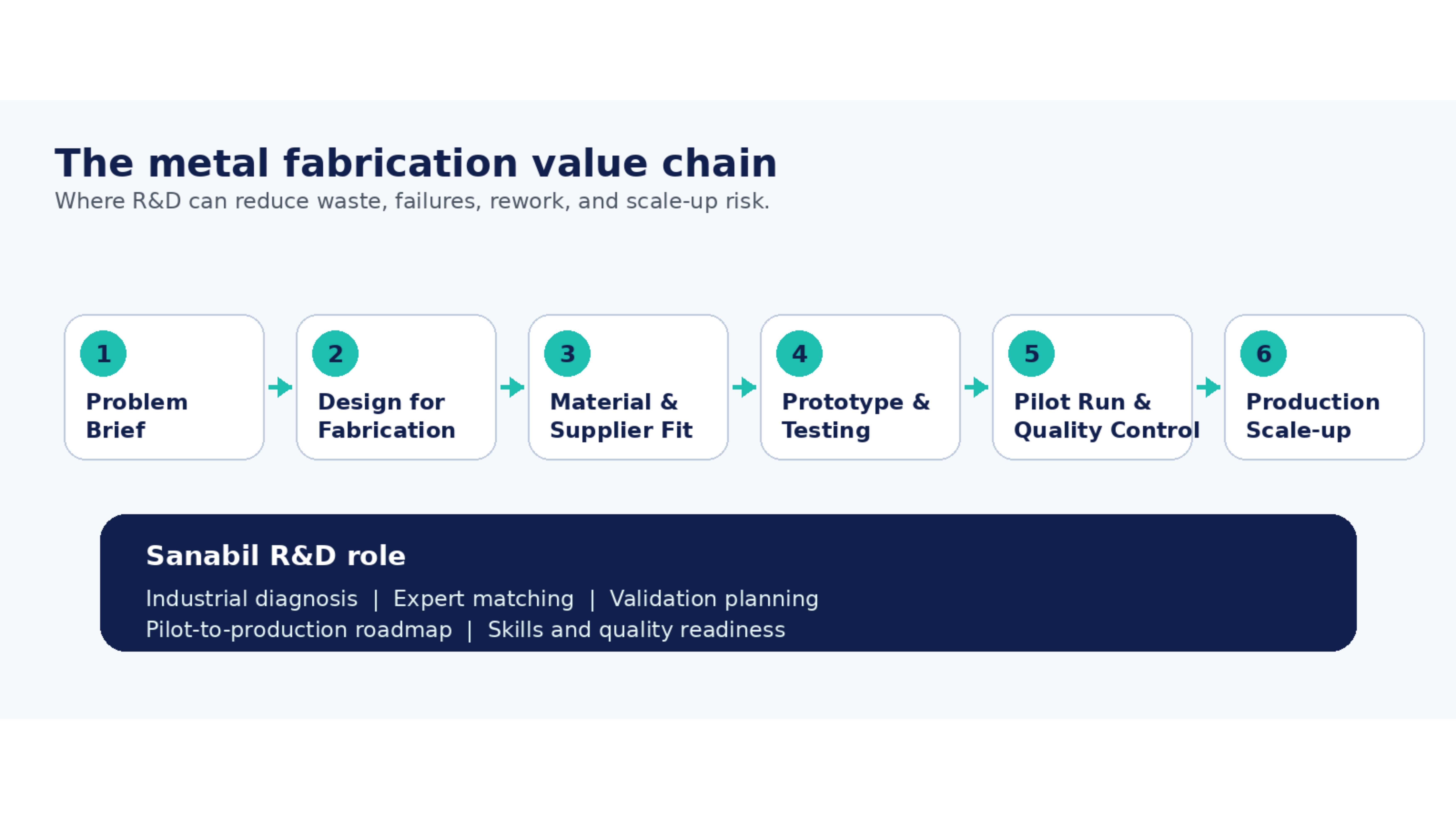
Metal fabrication does not need innovation as a slogan. It needs a practical R&D support stack that turns operational pain points into tested improvements, and turns new product ideas into manufacturable, scalable solutions.
Recommendations for manufacturers
Start by defining the exact problem: scrap rate, downtime, defect type, production delay, coating failure, welding distortion, cost uncertainty, or export rejection.
Measure before changing. Collect baseline data on material waste, machine downtime, labor hours, energy consumption, defects, and rework.
Review design before production. A manufacturability review can prevent expensive mistakes.
Prioritize high-return improvements that reduce waste, improve quality, or increase productivity quickly.
Invest in skills and documentation. A skilled worker without process documentation cannot guarantee repeatability.
Treat researchers as applied problem-solving partners and bring them into the factory context early.
Pilot before scaling. Test solutions on one product, one machine, or one production cell before full implementation.
Recommendations for researchers
Start with factory pain points, not only academic interests.
Visit the production floor before designing the solution.
Translate the problem into measurable indicators such as cost reduction, defect reduction, productivity increase, material saving, energy saving, or downtime reduction.
Design for affordability and ease of adoption.
Validate under real production conditions.
Package the research output into an implementation brief, not only a technical report.
Work with an industrial intermediary that can manage communication, expectations, intellectual property, testing, and commercialization.
How Sanabil R&D can support
Sanabil R&D works at the intersection between factories, researchers, experts, and commercialization pathways. For metal fabrication and engineering industries, Sanabil can support manufacturers and innovators through:
Industrial challenge diagnosis.
Prototype readiness assessment.
Design-for-fabrication review.
Applied research matchmaking.
Technical expert engagement.
Testing and validation planning.
Digital transformation opportunity mapping.
Skills and training needs assessment.
R&D project design and supervision.
Commercialization and pilot-to-production roadmap.
Suggested CTA for the website article
Facing fabrication challenges, recurring defects, product development delays, or prototype-to-production risks?
Book an R&D Clinic with Sanabil to diagnose the problem, map technical options, and build a practical validation roadmap.
The future of metal fabrication in Egypt will not depend only on having machines, workshops, and skilled hands. It will depend on how well factories combine engineering discipline, digital tools, applied research, quality systems, and workforce development.
Selected source notes
Ministry of Planning, Economic Development and International Cooperation, “Manufacturing Sector Targets for the FY 2025/2026 Plan”, 02 September 2025.
GIZ, “Private Sector Innovation in Egypt: Driving innovation, boosting growth, and enhancing competitiveness for Egyptian businesses”, 2024.
Creative gold for your inbox
Get the latest articles and news delivered straight to your inbox. Subscribe now to stay informed.